
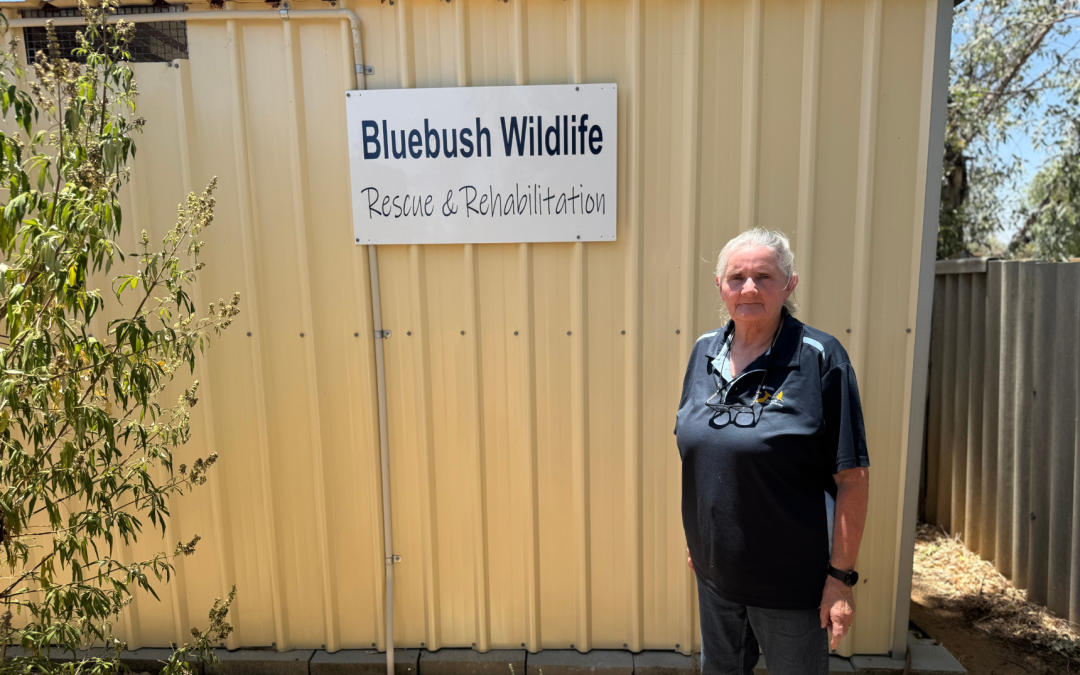
Sue Rose never imagined that moving from the UK to Australia would one day see her standing in the Wheatbelt, kangaroos at her feet. Yet today, as Founder and Chair of Bluebush Wildlife Rescue and Rehabilitation, that is exactly where life has led her.
“I didn’t come to Australia with any kind of plan like this,” Sue says. “If you’d told me years ago this would be my life, I wouldn’t have believed you.”
Sue grew up in the Midlands in the UK and trained as a nurse, building a career grounded in care, compassion and long shifts tending to others. In the early 2000s, she and her husband decided it was time for a change. After seeing a television story about nurses relocating overseas, they began exploring their options.
“As long as it was an English-speaking country, we were open-minded,” Sue explains. “We looked at the United States, but Australia just felt right.”
In 2003, Sue was interviewed by Sir Charles Gairdner Hospital and sponsored to move across. Her daughter and grandson followed in 2009, and Sue says the decision to migrate remains one of the best they’ve ever made. “It gave us opportunities we never would have had otherwise,” she reflects.
After retiring at 60, Sue and her husband took another leap of faith. They cashed in their superannuation and purchased 1,250 acres of land at Latham, a small Wheatbelt town. When a home became available in nearby Buntine, close enough to the property, they settled in. Eight years on, the region is firmly home.
Sue’s love of animals has always been part of who she is. Growing up in the UK, pets were a constant, and when she moved to Australia, her nursing background naturally translated into wildlife care. She began volunteering at a wildlife rescue in Malaga, often bringing her daughter along.
“It started as helping out where I could,” she says. “But once you see the need, it’s very hard to walk away.”
That early volunteering led to a long-term leadership role as President of WA Seabird Rescue, where Sue built experience, networks and a deep understanding of what running a rescue really involves.
Living in the Wheatbelt, Sue began to notice a troubling gap; injured wildlife had nowhere local to go. After conversations with a colleague in Coorow, it became clear there was no dedicated wildlife rescue servicing the area.
“It didn’t sit right with me knowing animals were suffering simply because help was too far away,” Sue says.
In 2018, Bluebush Wildlife Rescue and Rehabilitation was formed, named after the bluebush that grows across Sue’s property. Since then, the rescue has steadily expanded, supporting native wildlife across the Wheatbelt and coastal areas including Jurien Bay, Green Head and Lancelin.
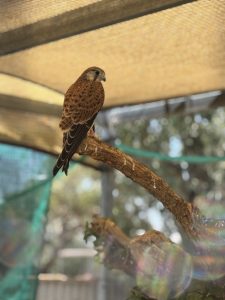
Today, Bluebush cares for kangaroos, birds, reptiles and bats, looking after all native animals except snakes due to safety considerations. The rescue operates with a small but deeply committed group of members and carers, some based locally and others in Perth who assist when needed.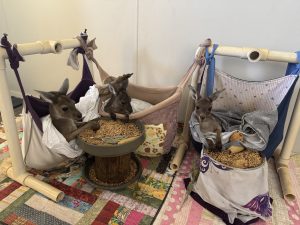
Sue’s days begin early, usually around 5:15am. If her husband is home, he helps with feeding the kangaroos before the day moves into food preparation, cleaning enclosures and planning for the next feed. Phone calls come in throughout the day, often from people seeking advice about injured wildlife.
“Leaving the property can be tricky,” Sue explains. “If we’ve got joeys that can’t be left alone, everything has to be carefully coordinated.”
No two days are the same. Some involve vet visits ahead of animal releases, while others are spent managing temperatures to keep animals warm in winter or cool during extreme heat. Kangaroos undergo a long rehabilitation process, with contact gradually reduced as they grow.
“Once they reach around 15 or 16 kilos, they move to the sanctuary,” Sue says. “I still visit daily at first, then slowly step back.”
After around three months, they are released back into the wild.
Birds require a different approach. Chicks raised from a young age can imprint easily, so Sue raises them alongside others of the same species wherever possible. Adult birds are returned as close as possible to where they were found. Many species of birds are monogamous mate for life. Our Bobtails (Shingleback Lizards) are one reptile known to mate for life.
All rehabilitated wildlife should be returned to their original location wherever possible. Placing them somewhere unfamiliar leaves them vulnerable to attack from resident territorial wildlife especially during breeding season and they also won’t know where the food and water sources are
For Sue, the most rewarding moments always come at release. Seeing a sick or orphaned animal return to the wild reinforces why the work matters. One kangaroo, a red roo named Blue, holds a particularly special place in her heart.
“Blue was the very first kangaroo released at the sanctuary in 2019,” Sue says. “She still comes back.”
Sue recognises her by a split in her ear, the result of an early encounter with a cat. Blue has had a joey every year since, and other kangaroos from the sanctuary have also gone on to successfully breed.
Running a wildlife rescue is not without its challenges. The work is physically and emotionally demanding, with night feeds, long days and difficult outcomes taking their toll.
“There are moments that stay with you,” Sue says. “Not every story ends the way you hope, and that can be really hard.”
Looking ahead, Sue hopes Bluebush Wildlife Rescue and Rehabilitation can continue even when she and her husband can no longer be directly involved. The rescue currently has around 30 members, with 13 to 14 active carers spread across the Wheatbelt, Jurien Bay and Perth.
“Growth isn’t the goal,” Sue explains. “Sustainability is. We want to stay compliant, manageable and effective, and make sure the animals are always our first priority.”
That long-term sustainability relies heavily on community support. Bluebush operates entirely through public donations, with ongoing costs quickly adding up. Joey milk, mice, veterinary care, transport and daily feed are all essential, and for many years Sue and her husband covered much of these costs themselves.
“You don’t think about it as a choice,” Sue says. “You just do what needs to be done for the animals in your care.”
Grants occasionally assist with infrastructure such as aviaries and water tanks, while Containers for Change and local fundraising play a vital role in keeping the rescue going. Practical donations such as towels and pillowcases are always needed, and volunteers are welcomed for animal transport, fundraising and hands-on support. Projects like kestrel nesting boxes are also high on the wish list.
From a childhood in the UK to a life immersed in wildlife care in regional Western Australia, Sue’s journey has taken many unexpected turns. It’s a path she never imagined taking, but one she wouldn’t change for a moment.
If you would like to support the ongoing work of Bluebush Wildlife Rescue and Rehabilitation, donations are always gratefully received. Every contribution helps ensure injured and orphaned wildlife across the Wheatbelt and coastal regions can receive the care they need before returning home to the wild.
Donations can be made via direct transfer: