Written by Lynn Whyatt, RRR Network Storyteller
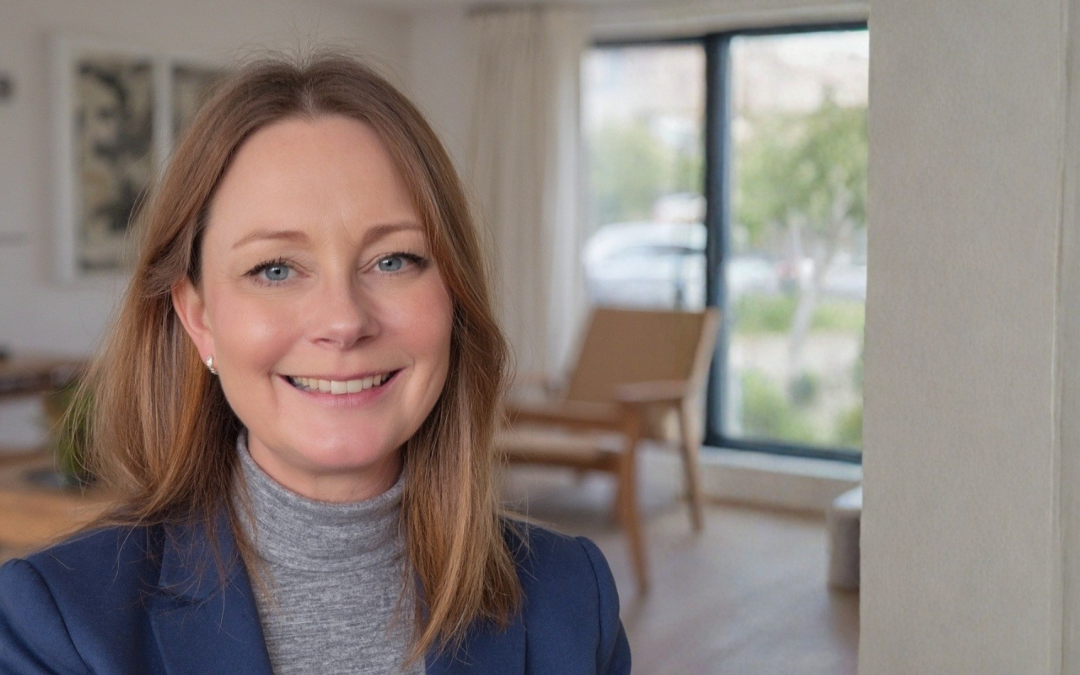
Curiosity can be a quiet thing, almost unnoticeable at first, like the soft hum of a computer before the screen flickers to life. For Denmark resident Gillian Corker, curiosity has never been quiet. It has always been the spark guiding her hands, her decisions, her sense of possibility. It is the reason a thirteen-year-old Gillian once took apart the brand-new family computer on Christmas morning, her dad walking in just in time to warn that if she could not put it back together, she simply would not have one. She rebuilt it, of course. It rattled, but it worked!
That moment became a metaphor for how she would navigate the world: press the button, see what happens, trust that you can figure it out. This same spirit is what carried her across countries and continents before finally settling in the lush and peaceful town of Denmark, Western Australia. After ten years in Perth, ten years in Scotland, and an upbringing in Geelong, she and her family moved to Denmark two years ago, welcoming the slower rhythm and the deep sense of community that anchors the region. She speaks fondly of the green landscapes that remind her of her childhood in Scotland, the cool air, and the feeling of being truly a part of community.
Even during school holidays, when Denmark’s population surges as families descend on caravan parks and the internet falters under the weight of thousands of extra devices, Gillian still marvels at the beauty of the place. The shop shelves empty and bandwidth disappears, but the influx brings energy and vitality to local businesses, sustaining the town through the quieter months that follow. It is a pattern of ebb and flow she has come to appreciate.
Her love of technical puzzles was nurtured by a family of engineers and thinkers, particularly her mother, who would likely have been a maths professor had she been given the opportunities afforded to women today. Instead, women of her mother’s generation were often funnelled into secretarial roles or teaching. Gillian grew up observing brilliance that was not fully realised and vowed not to shrink her own capabilities.
Through her teens and university years she worked in hardware stores, gaining a reputation as someone who enjoyed the challenge of technical problem solving. Her curiosity then carried her through a multimedia degree, journalism, work in the optical industry in the UK, and eventually to teaching people how to build their own websites. For eight years she supported small business owners to navigate the digital world with confidence, demystifying technology for people who were often afraid of “breaking something.”
Today, that same instinct guides her in her role as CEO of the Denmark Chamber of Commerce, where she blends her technical mind with her passion for community. For Gillian, it feels like a culmination of all the threads she has carried with her: service, problem-solving, connection, and the joy of watching people flourish. Everything she loves seems to be coming together in this role.
Her personal life is shaped by another kind of deep understanding. Both Gillian and her ten-year-old son are neurodivergent, and moving to Denmark has offered a level of acceptance and support they had never experienced before. With one public school and two small independent primary schools, Denmark provides choice and a genuine commitment to meeting children where they are. “There’s a lot of neurodivergence down here,” she says, “and I can understand why we’re attracted to this area.”
Her own diagnosis, received five years ago, helped her make sense of a lifetime of unspoken challenges: why she struggled to understand people on the phone, why she needed subtitles to process dialogue, why she relied on facial cues to comprehend speech. The diagnosis brought clarity, but more importantly, it brought compassion. Gillian reflects that it’s better now living in an age where you can actually say you are struggling with something out loud, and people accept it rather than question it.
Outside of work and parenting, Gillian finds peace in puzzles like the New York Times word games, Sudoku, or anything that offers her mind something intriguing to untangle. She also sketches, savouring the calm of putting pencil to paper. As her son grows older, her priorities are shifting again. “Five years ago, my focus was just keeping my son alive,” she says with a laugh that many parents share. Now, she is helping him build a life of confidence and connection while also carving out more space for her own growth and joy.
Despite describing herself as a “lone wolf” at one stage, Denmark has offered her friendships she never expected. Historically, she has found forming female friendships especially difficult, but here she has discovered connection that feels natural and reciprocal. “The community here has been more accepting, more supportive,” she explains. “It’s been easier to integrate here than anywhere else I’ve lived, even Scotland which is an extremely friendly place.” For a woman who has lived in three countries and multiple communities, that ease is meaningful.
When asked what message she would share with women across rural, regional, and remote WA, Gillian focused on the pressing of buttons, both literally and metaphorically. She has seen again and again how women hesitate out of fear: fear of doing it wrong, fear of breaking something, fear of not knowing enough. “I’d love to see women take bolder, crazier decisions and think, if it breaks, it breaks,” she says. She encourages women to embrace imperfection, take risks, and trust in their ability to navigate uncertainty.
Gillian’s story is threaded with intelligence, curiosity, resilience, and a grounded love for community. It is the story of a woman who takes things apart and puts them back together, sometimes rattling but always working. Denmark, with its green embrace and supportive spirit, feels aligned with who she is becoming; someone who presses buttons, embraces curiosity, and encourages others to be a little bolder, a little messier, and much more themselves.
Her journey is not loud or showy. It is the quiet revolution of a woman who looks at the world and asks, “What does this do?” and then finds out.