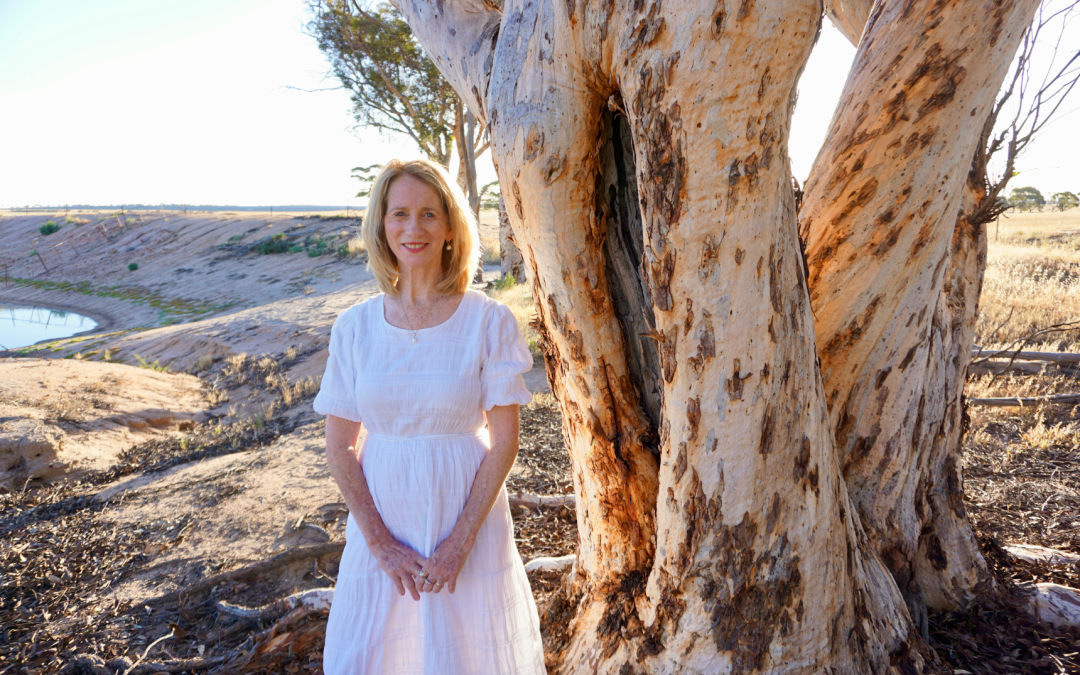
Written by Dr Teresa O’Brien
When children grow up and leave home, our houses become emptier and quieter. For some women, this moment brings pure exhilaration, freedom, and relief. For others, it’s an emotionally tough time that stays with them forever.
Over a career spanning more than 30 years, I’ve listened to and spoken with many women. When I shared my plans to write about the empty-nest experience, the women I spoke to across towns, cultures, and nations recounted their own memories, many of them still viscerally raw years later. Books guided me through most stages of life, but where was the book for this one?
I am a wheatbelt farmer. I have three daughters who left home to attend boarding school. For me, and many other women in rural, regional, and remote areas, the empty nest begins earlier, marked by boarding school drop-offs and the cyclical sadness of term-time departures. I open the book with that very scene: driving my daughters along a rural highway, my face wet with tears that never quite dried.
I wrote Living The Empty Nest: A World Beyond Mothering for the country women who share a similar experience: “I didn’t think it could be so hard, how lonely it would be.” It’s not the physical loneliness of the empty house, but the unexpected loneliness of living in a world that few people truly understand. Mainstream conversations about motherhood don’t talk about that part.
When the empty nest coincides with menopause, mounting feelings of invisibility, retirement, and the looming responsibility of caring for aging parents, women face profound questions about life’s purpose and identity.
Rather than offering clichéd reinvention in shiny, inspirational ways, the book explores fundamental questions: Who am I when the family is gone? How do we rebuild relationships, friendships, purpose and identity when mothering changes shape? Why doesn’t our Western culture have a language, rituals, or a roadmap for this profound shift? What do we do now? How do we take responsibility for the part of our life we have yet to live?
Rural mothers shoulder layers of invisible labour: long-distance parenting, living far from support services, and navigating the emotional toll of children leaving years before their city peers. This is why I name early empty nesting as a legitimate mental health and policy issue for rural, regional and remote communities.
Stories That Matter
Living The Empty Nest weaves together stories from farmhouses, regional centres, and cities across Australia. It offers practical chapters on loneliness, digital connection, career reinvention, travel, self-care, grandparenting, and legacy. The narrative voice is shaped by my life, reminding readers that the woman they were before motherhood is still there, waiting. She is not a universal woman, but a familiar one. She is each of us: past, present, and emerging.
Above all, this book is a companion for women rediscovering themselves in midlife, together. It’s a reminder that rural women’s stories matter, and that naming our experiences is the first step toward real cultural change.
Although my rural perspective influences the stories I share, the emotions go beyond fences and borders. Wherever you live, the grief and wonder of an empty nest are familiar. In sharing my story, I hope you’ll recognise parts of your own, even if the landscapes differ.
Living The Empty Nest: A World Beyond Mothering is available at Author Website | Vivid Publishing